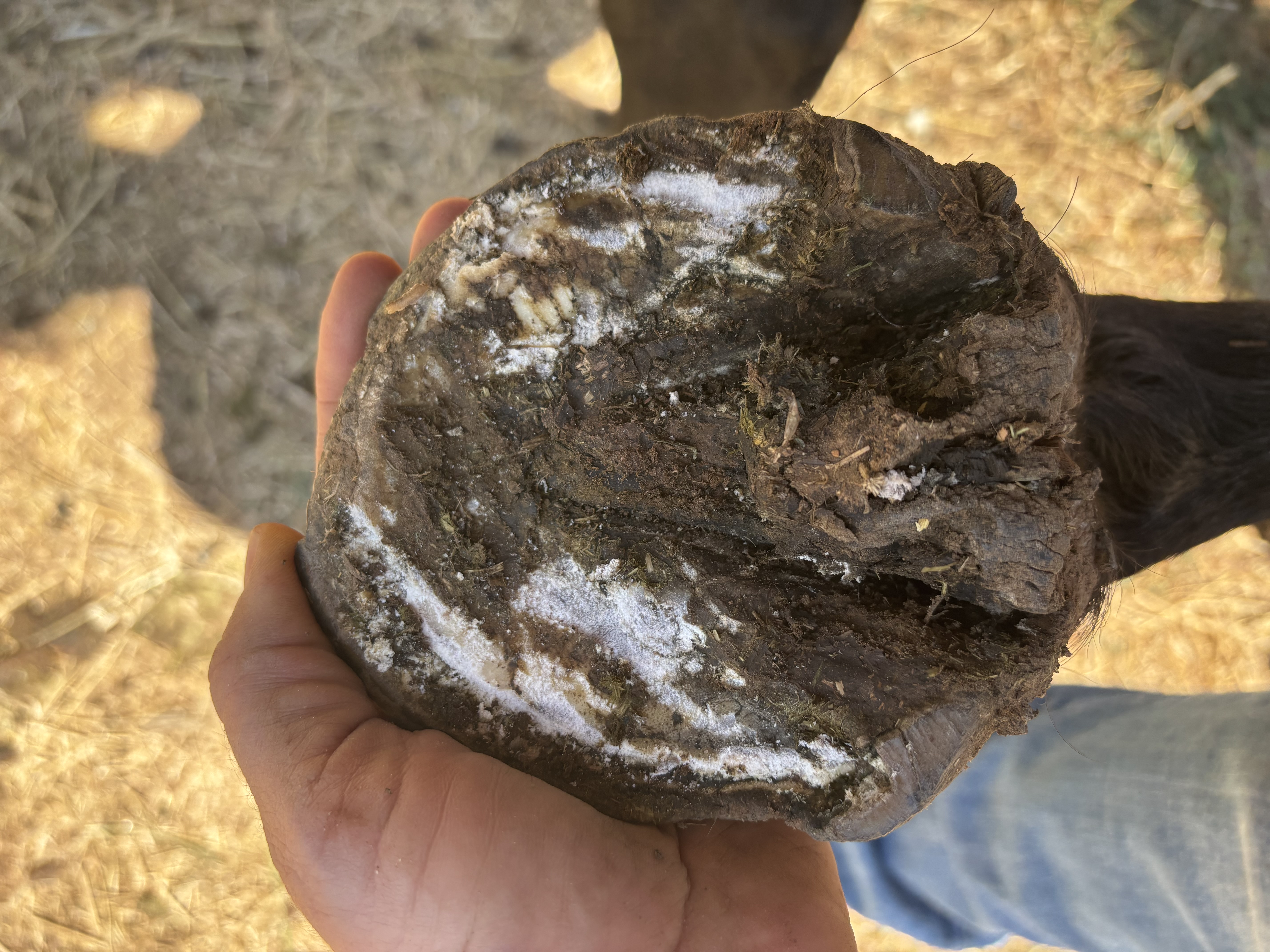

Chances are, thrush is not what you think it is.
Because it has surprised me time and again. I live in an extremely dry, high desert climate. I thought thrush was not a problem I would ever be dealing with.
Thrush only happens in muddy conditions. Right?
I was wrong!
These are signs that your horse might be suffering from thrush:
1. Your horse suddenly hates having their feet picked out
2. Short, choppy strides
3. Toe-first landing
4. Chronic heel soreness
5. Deep cracks around the frog
6. A frog that’s shrinking
7. No smell… but black debris in hooves
8. Recurrent abscesses
9. Frequent stumbling
10. A deep central sulcus you can fit your hoof pick into
What causes thrush?
Thrush is caused by opportunistic bacteria (and sometimes fungi), but those microbes only take over when the hoof environment allows them to.
A consistently damp, dirty environment can cause thrush. But not every horse living in such a way will get it. So that’s not the whole story.
It’s really caused by hoof imbalance. Contracted heels, underrun heels, long toes, deep us cracks and unbalanced trimming.
In all of these situations, the frog doesn’t get enough stimulation or airflow. And the junk grows.
The other factor? Deficiencies.
Nutritional imbalances such as inadequate intake of key nutrients needed for hoof growth. Copper is huge here, and NPK-fertilized hay suppresses copper 100 percent.
Chronic inflammation from a high sugar/starch diet.
Metabolic disorders, such as insulin dysregulation or PPID, which can affect overall hoof health.

How to Treat Horse Thrush Naturally
Start by cleaning up! Your horse’s yard and diet.
Keep the yard as clean as possible by removing manure daily. If your horse is stalled, make sure they have plenty of clean, dry bedding.
Pick out the hoof daily (twice a day is even better!) and work with your farrier to get the hood balanced and with correct angles. You can message me if you need a consult with this.
Remove grains and get your horse on a forage-based diet. Test that all hay is under 10% NSC and graze pastures during safe hours only (3 am-10am when nights are above 40 degrees Fahrenheit).
Consider copper/zinc supplementation if your horse is depleted.
Encourage your horse to move as much as possible to stimulate the frog and good circulation.
Use the natural recipes below to help balance the hoof’s microbiome:

Clean the hoof thoroughly and spray into all crevices. Allow to dry somewhat before applying the powder. It’s handy to use a towel or to set the hoof on a clean, hard surface. Then, apply the powder:

Mix all ingredients well. Apply the powder to a clean, dry hoof, being sure to get it into the cracks and crevices of the hoof. I like to use an old spice shaker bottle for this.
You can use the powder without the hoof healing spray. It just adds another layer which helps the natural bacteria balance of the hoof.
Keep applying these treatments daily until the symptoms are gone.
I don’t think thrush is simply something you kill. It’s something you make the hoof less hospitable to.
Instead of constantly applying stronger chemical topical products, works towards the conditions that support a healthy hoof:
- Keeping the feet clean and as dry as practical
- Encouraging daily movement
- Maintaining balanced hoof care
- Supporting good nutrition and supporting minerals
- Using natural topical treatments to help reduce the microbial load while the hoof heals


Leave a Reply