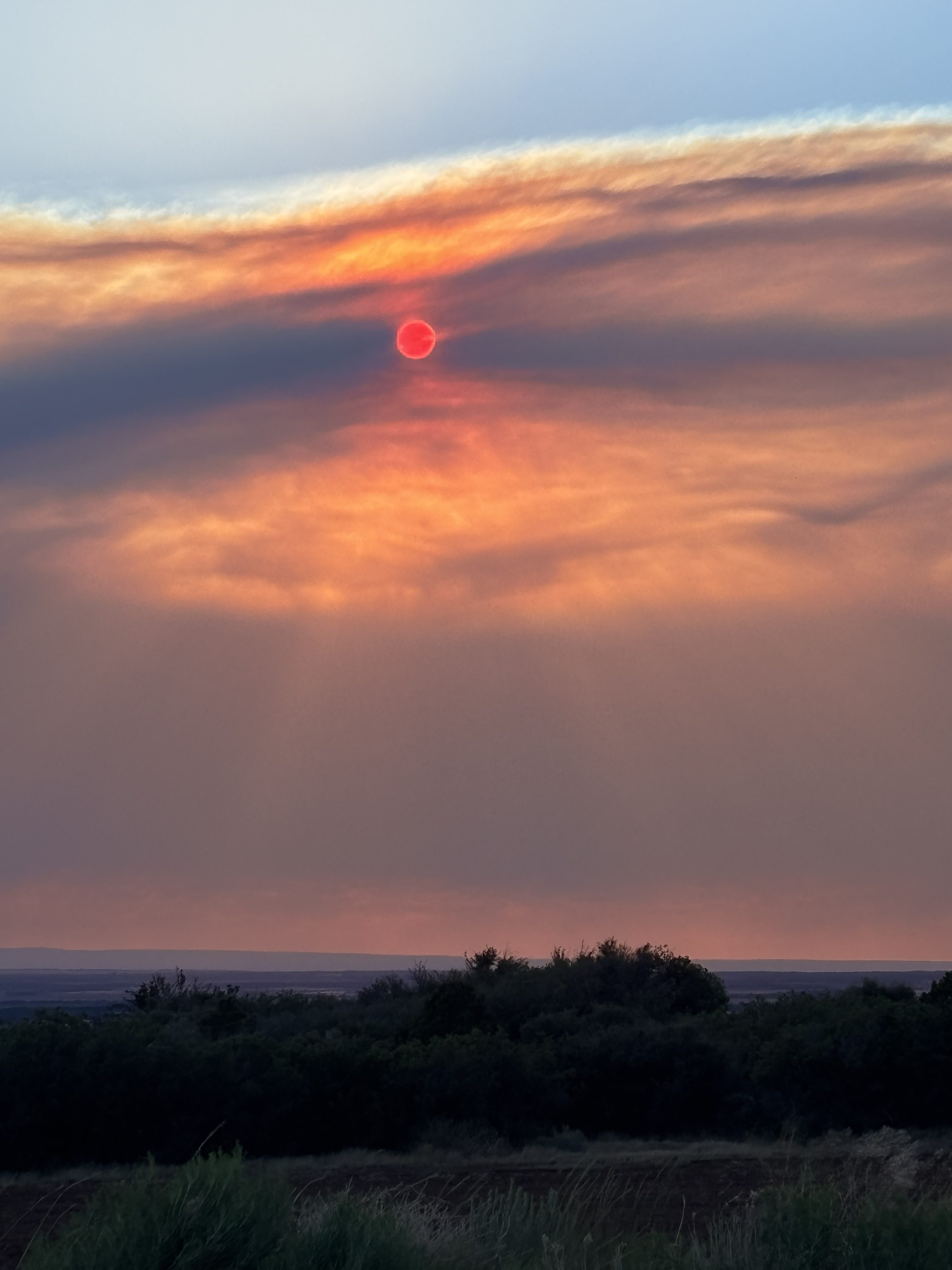

I was personally affected by this in July when a forest fire that reached close to 65,000 acres came within 5 miles of my ranch.
The fire was the scariest part. The the smoke was a close second.
The thick, yellow atmosphere that settled every morning. The stinging eyes, running nose and dry cough.
It affects horses as well as humans.
Here’s how to naturally support your horse through wildfire smoke and poor air quality.
Smoke is Dangerous for Horses
Smoke exposure poses severe respiratory and systemic risks for horses.
Symptoms range from coughing and nasal discharge to fever, respiratory distress, or even total collapse in weaker animals.
The chemicals in smoke cause pain, inflammation, and irritation. Once they are inhaled, these chemicals damage the horse’s mucous membranes and cilia. And then damage to these structures exposes the horse to a higher risk of developing secondary upper respiratory airway infections.

Start with Management
Check the Air Quality Index daily during wildfire season and use it to make daily management choices.
Don’t train or exercise when smoke is present to minimize irritation and accumulation of particulate matter in the lungs.
Soaking hay can reduce further inhalation of dust particulates, which is an added stress when smoke is already thick.
Feed horses on the ground so that nasal secretions can drain downwards and the body can flush naturally.
A UV protecting fly mask can help protect the eyes from soot in the air.
Herbs to Support the Respiratory Tract
Mullein: Acts as a gentle, relaxing expectorant that coats and calms irritated lung tissue.
Marshmallow Root: Provides a high mucilage content that lines and soothes a smoke-sore throat and upper airways.
Peppermint: Cools the respiratory tract, opens up airways, and helps settle an anxious or restless horse.
Licorice Root: Helps suppress a dry cough and supports delicate mucous membranes.
These can be fed dried or as a warm herbal tea poured over wet feed. Use 1 Tablespoon of dried herb to 1 cup of hot water. You can combine these herbs into a mix.

For smoke-related eye irritation
if your horse has weepy irritated eyes from the smoke, they may need the added support of eyebright which can be either added to feed dry for horses with runny noses or as an eyebath to the eyes.
Use 1 to 2 tablespoons of eyebright with a tea diffuser in a bowl of water as if making a large cup of tea, steeping the herb for ten minutes.
Then using a face washer that has been immersed in the tea, wash the eye area. The tea can be used warm or cool. Both are soothing.
For Fire-Related Stress
If your horse needs stress support because they are sensitive, add lemon balm. It is particularly useful with anxiety states while supporting the respiratory and digestive actions of the herbs in both blends. Use 1 tablespoon daily.
Essential Oil Vapor Treatment
This is excellent when dealing with sinusitis, bronchitis and coughs. It soothes and opens the airways.

Recovery After Fire Season
Once this fire season has passed, some horses may need recovery support for specific needs. Especially older horses, or those with weak immune systems.
The herbs mentioned in this post are all gentle herbs that can be given long term without concern of them interacting with medications.
Once the smoke has cleared some horses may move on to a specific blend to build up their immune system further.
Some horses may need herbs that target residual congestion or stress from what they have experienced.
You can learn about custom protocol for your horse here:
Leave a Reply